Acquiring a new client costs five times more than keeping an existing one. Yet most salons, spas, and clinics invest far more in advertising than in rewarding the clients they already have. A well-designed loyalty programme changes that equation entirely — and the businesses that run one see measurably higher visit frequency, higher average spend, and dramatically lower churn.
1Why loyalty programmes actually work
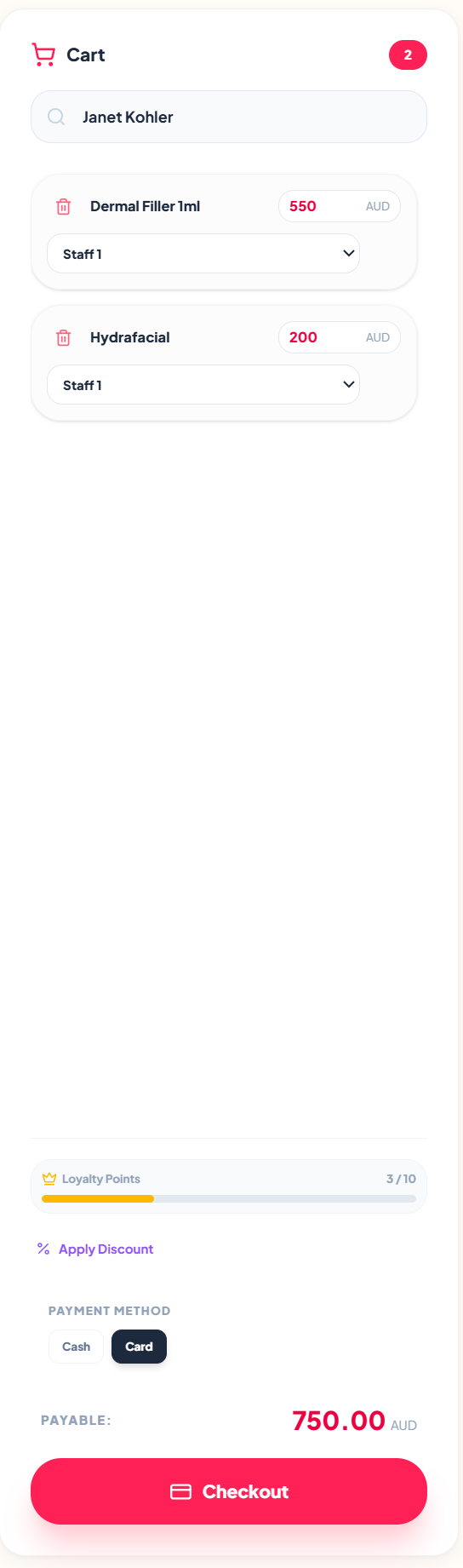
Most salon owners assume loyalty rewards are simply a discount mechanism — a financial incentive to come back. The psychology is more interesting than that. Research in consumer behaviour consistently shows that customers enrolled in a progress-based reward system visit more frequently regardless of how close they are to their reward. This is the "endowed progress effect": the mere fact of having a progress score (3 out of 10 visits) creates a personal goal the customer is motivated to complete.
They're not coming back for the discount. They're coming back because they're 30% of the way there — and leaving would mean starting over. A loyalty programme is a quiet, persistent pull that your competitors simply cannot replicate without their own programme.
2Choose the right earning model for your business
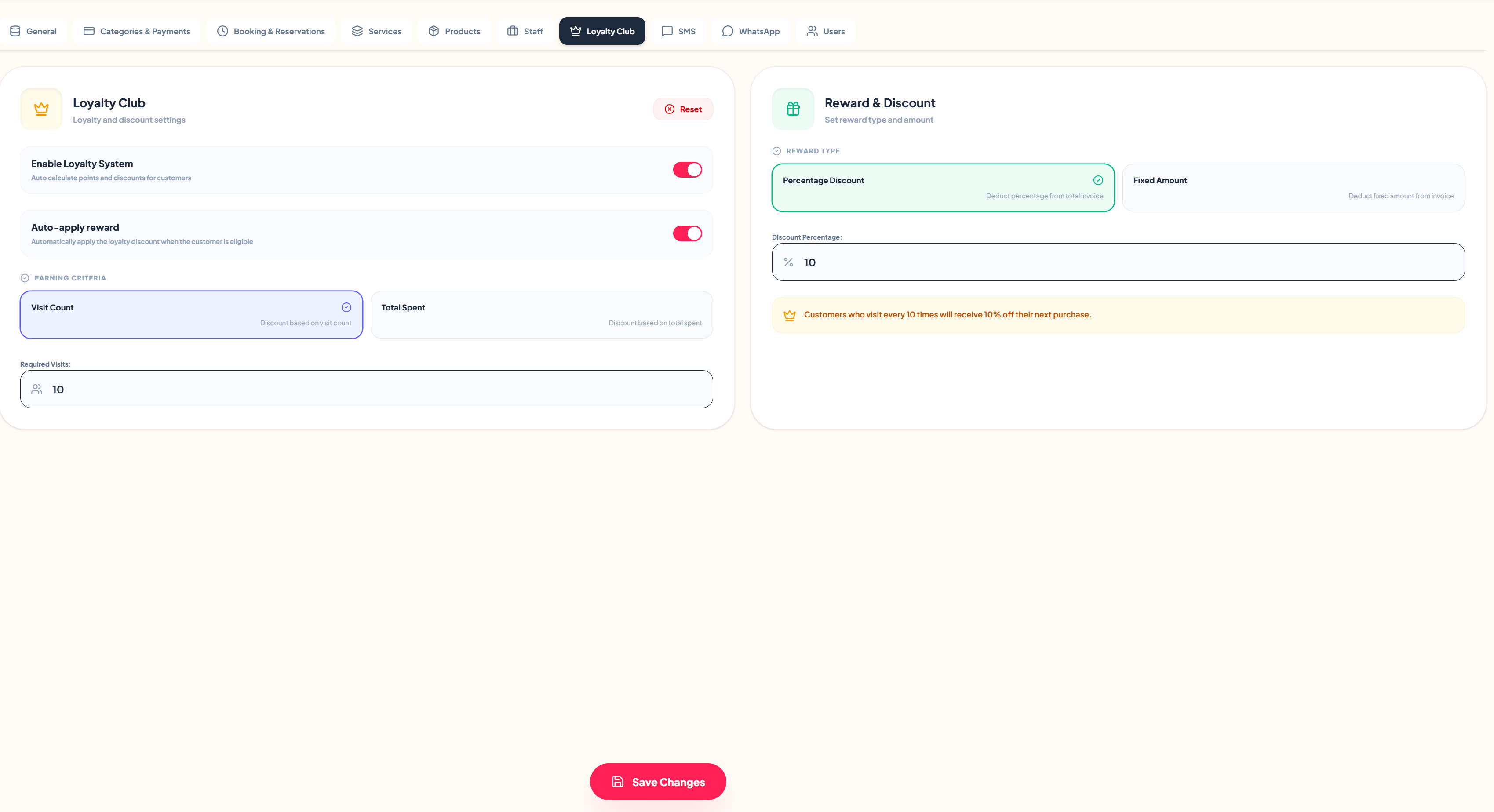
ZibaDesk supports two earning models, and picking the right one for your business type makes a real difference to how engaged your clients feel:
- Visit Count — clients earn one point per visit and receive a reward after a set number (e.g. every 10 visits = 10% off their next service). Ideal for salons, barbershops, and nail salons where each visit has a similar value. Simple to explain, simple to earn.
- Total Spent — clients earn rewards based on cumulative spending, reaching a threshold to unlock a discount. Better suited to businesses with wide price variation — a client booking a $600 package accrues rewards faster than one booking a $60 trim, which is exactly the right incentive structure for higher-value services.
You can switch between models at any time without losing client history. Most salons start with Visit Count for its simplicity, then switch to Total Spent as their menu diversifies.
3The numbers: what a loyalty programme does to your retention curve
A loyalty programme doesn't just feel good — it produces measurable shifts across the metrics that matter most:
- +28% visit frequency among enrolled clients vs. non-enrolled clients in the same segment (industry benchmark across salons using digital loyalty systems)
- +35% lifetime value for loyalty members compared to non-members in equivalent spend tiers
- −15% churn in the 90-day window following a client's first reward redemption — the point at which they start accumulating again
That last metric is important. The first redemption is a loyalty inflection point. Once a client has used their reward and sees their counter reset to zero, loss aversion kicks in — they're now motivated to rebuild what they had. The cycle self-reinforces, which is why long-running programmes compound in value over time.
4Auto-apply: remove the friction that kills loyalty programmes
The most common reason loyalty programmes fail has nothing to do with the rewards themselves. It's friction at the point of redemption. When clients have to remind staff they're enrolled, hunt for a stamp card, or manually request their discount, the experience falls apart — and so does the emotional payoff that drives future visits.
ZibaDesk's auto-apply option eliminates this entirely. When a client reaches their reward threshold, the discount appears automatically in the POS cart at checkout — no asking, no fumbling, no staff needing to remember. The client sees their loyalty progress right on the payment screen. If they've earned a reward, it's applied with a single tap. If they're still building toward it, they can see exactly how many visits remain.
5Set it once, let it run
The practical advantage of a digital loyalty system over paper stamp cards is that it requires zero ongoing management. You configure your rules once — earning criteria, required visits or spend threshold, reward type and amount — and the system handles everything from there.
Every visit is tracked automatically. Every discount is calculated precisely. Every client's progress is visible in their profile. You never have to remember who is eligible, manually calculate a discount mid-service, or deal with a "I lost my stamp card" conversation. For a busy salon with 200+ active clients, the manual version is effectively impossible to run consistently. The digital version runs in the background whether you're on the floor, on the phone, or just having a packed Saturday.
6Percentage discount vs. fixed amount — which converts better?
Both reward types work well, but they suit different businesses and price points:
- Percentage discount (e.g. 10% off the next service): The reward scales with the booking value, so a client booking a premium service feels appropriately rewarded. Communicates well — clients instinctively understand "10% off." Most common setup in salons achieving strong retention results.
- Fixed amount (e.g. $20 off): Creates a clear, tangible reward that clients can visualise before they book. Often converts better in price-sensitive markets because there's no ambiguity about the value. Also easier to budget for from the business side.
ZibaDesk supports both. If you're unsure where to start, a 10% percentage discount after 10 visits is the most commonly used setup — simple to explain to clients, meaningful enough to motivate, and easy to sustain financially.