Many clinics without modern aesthetic clinic software still track multi-session courses — laser hair removal, skin booster series, microneedling protocols — on paper diaries or Excel spreadsheets. The result is depressingly familiar: missed follow-ups, half-finished packages, lost revenue, and patients who quietly drift away because no one remembered to call them back. Treatment plans aren't just an operational nicety; for any TGA-aware Australian clinic running multi-session protocols, they are the single biggest hidden lever on annual revenue.
1The maths of unfinished packages
Run the numbers on a typical 6-session laser hair removal package and the leak becomes obvious. A package sold at AUD $1,200 works out to $200 per session. If 30% of patients drop out after session 3, you've forfeited $600 per dropped patient — and worse, you've already paid the consumables, room time, and technician hours for the sessions they did attend, so the lost margin is even sharper.
For a clinic doing 20 packages per month with that drop-off pattern, that's roughly AUD $3,600 of recoverable revenue evaporating every single month. Annualised, that's a small car. Most owners shopping for medspa software and similar clinic tools discover this number only when they finally migrate their data into a proper system — and the cause is almost never the patients losing interest. It's that no one had a single screen showing who was overdue.
2Why digital tracking changes everything
The fix is conceptually simple, but it has to be built into the daily workflow — not bolted on as an afterthought. Three capabilities, working together, rebuild the lost revenue:
- One screen, one glance. Every patient record shows where they are in their protocol — "session 3 of 6" — with a progress bar visible the moment your reception team opens the file.
- One-tap session logging at checkout. When the patient pays, the front desk taps "Log session" and the counter advances automatically. No double-entry, no forgotten paperwork at the end of the day.
- Auto-recall scheduling. When the next session is due, the system flags the patient on your dashboard and (optionally) sends them a recall message. The clinic stops chasing — the software does.
The combination is what matters. Any one of these on its own is a half-measure; together, they close the loop between selling a package and collecting every dollar of it.
3What good treatment-plan software looks like (case study with ZibaDesk)
ZibaDesk's Aesthetic Mode was built around exactly this workflow. When you turn it on, every customer record gets a Treatment Plans panel with the building blocks that aesthetic clinics actually need — not a generic loyalty card retrofitted to look like one.
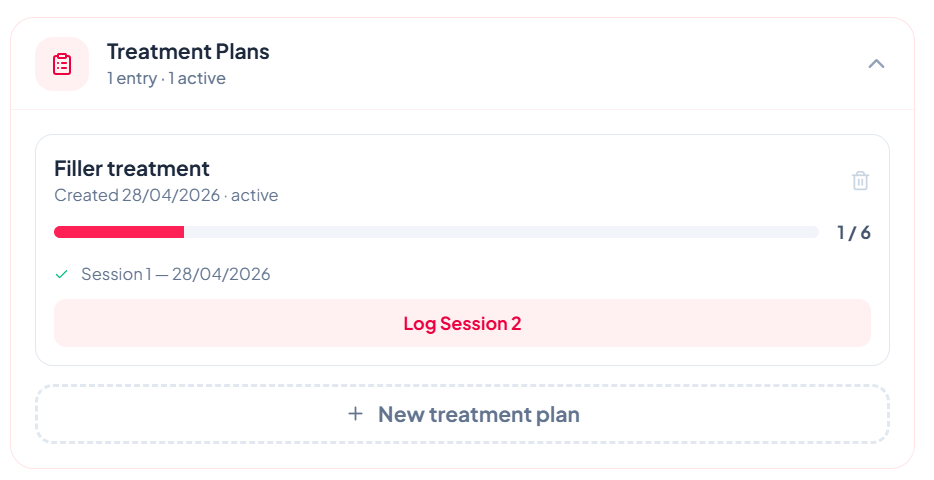
Specifically, what makes the difference in real clinics:
- Per-patient progress bar — visible to your front desk at a glance, so they can sell the next session without flipping through paper notes.
- Configurable session count per plan — a 6-pass laser course, an 8-treatment skin-needling protocol, or a 3-vial filler series all live in the same structure.
- Session notes per visit — date, technician, units used, and batch/lot number for traceability. Critical when a manufacturer issues a recall, or when a patient asks "what brand did I have last time?"
- Auto-completion — once the target session count is reached, the plan is marked completed, archived, and surfaced in your retention reports.
4Bonus: treatment-plan reporting is your retention dashboard
Once the data is in one place, the reports practically write themselves. The same panel that captures sessions becomes the most valuable retention dashboard you've ever owned:
- Plans 30%+ behind schedule = patients who need a re-engagement message this week. A short, warm SMS often recovers the package.
- Newly-completed plans = upsell opportunities for follow-up courses, maintenance plans, or complementary treatments. Strike while they're still happy with the result.
- Top-revenue plan types = unambiguous signal for where to spend your marketing budget. Promote what's already converting; stop subsidising what isn't.
Most clinic owners we work with — from boutique aesthetic studios to full-service operators on day spa software — discover within the first month that one or two of these insights alone cover the cost of the software for the entire year.