NC Clinics is a small cosmetic and aesthetic practice on Australia's east coast. Two nurse injectors, a dermal therapist, and a front desk that never quite stops. A few years ago the clinic ran on a booking app, a separate card terminal, a folder of paper consent forms, and a spreadsheet nobody trusted. Today it runs on one. Here is an ordinary Tuesday, hour by hour, and the aesthetic clinic software quietly holding it together.

17:40am — Priya lifts the shutter
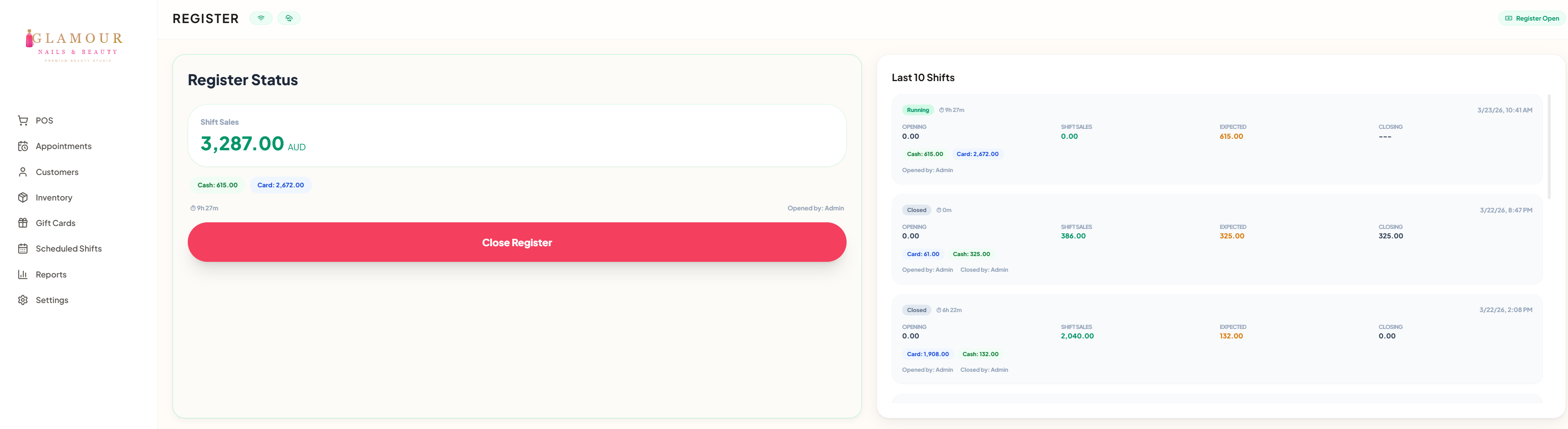
Priya runs the front desk, and she is in before anyone else. The first thing she does is open the register for the day and count the float into the till. It is a thirty-second ritual, but it matters: every sale, refund, and tip from now until close lands inside this one session, so the end-of-day figure actually reconciles.
There is no separate card machine to switch on, no lockbox to reconcile by hand. The clinic's card reader is tied to the same screen, which means a $480 lip filler and a $35 retail serum sit in the same ledger. By the time the kettle has boiled, the clinic is technically open for business.
28:05am — The whole day on one screen
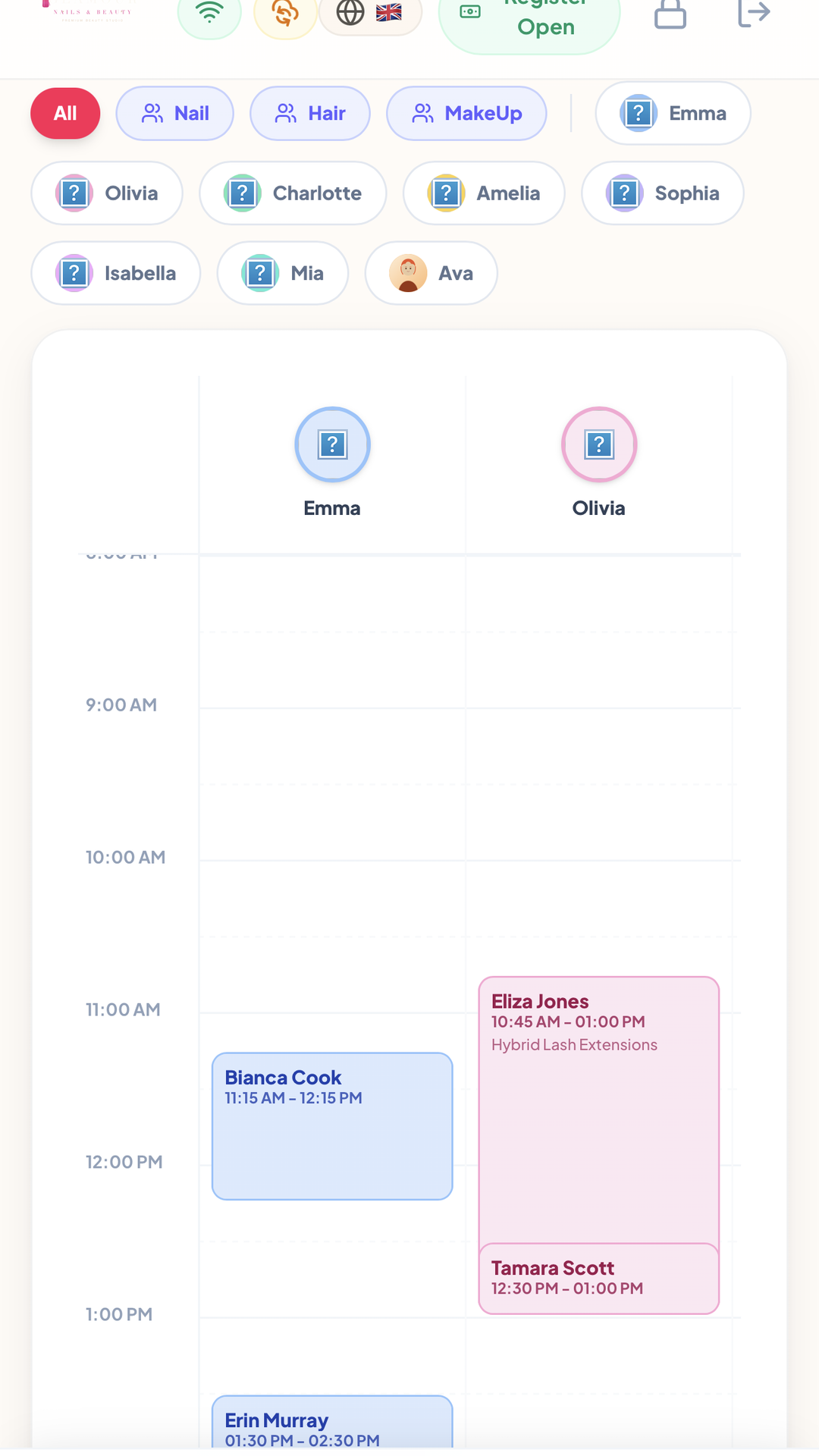
Coffee in hand, Priya pulls up the day's diary. Two injectors and the therapist, side by side, their columns already filling: a 9:15 anti-wrinkle review, a 10:45 hybrid lash set, a midday consult that was pencilled in last week.
What she is really checking is the shape of the day — where the gaps are, who is double-booked, which client needs a longer slot. She can filter the calendar by practitioner or by service type, so the lash bookings and the injectable bookings do not blur into one wall of colour. A clinic lives and dies by its diary, and having every chair visible at a glance is the difference between a calm morning and a frantic one.
38:30am — The bookings that arrived overnight
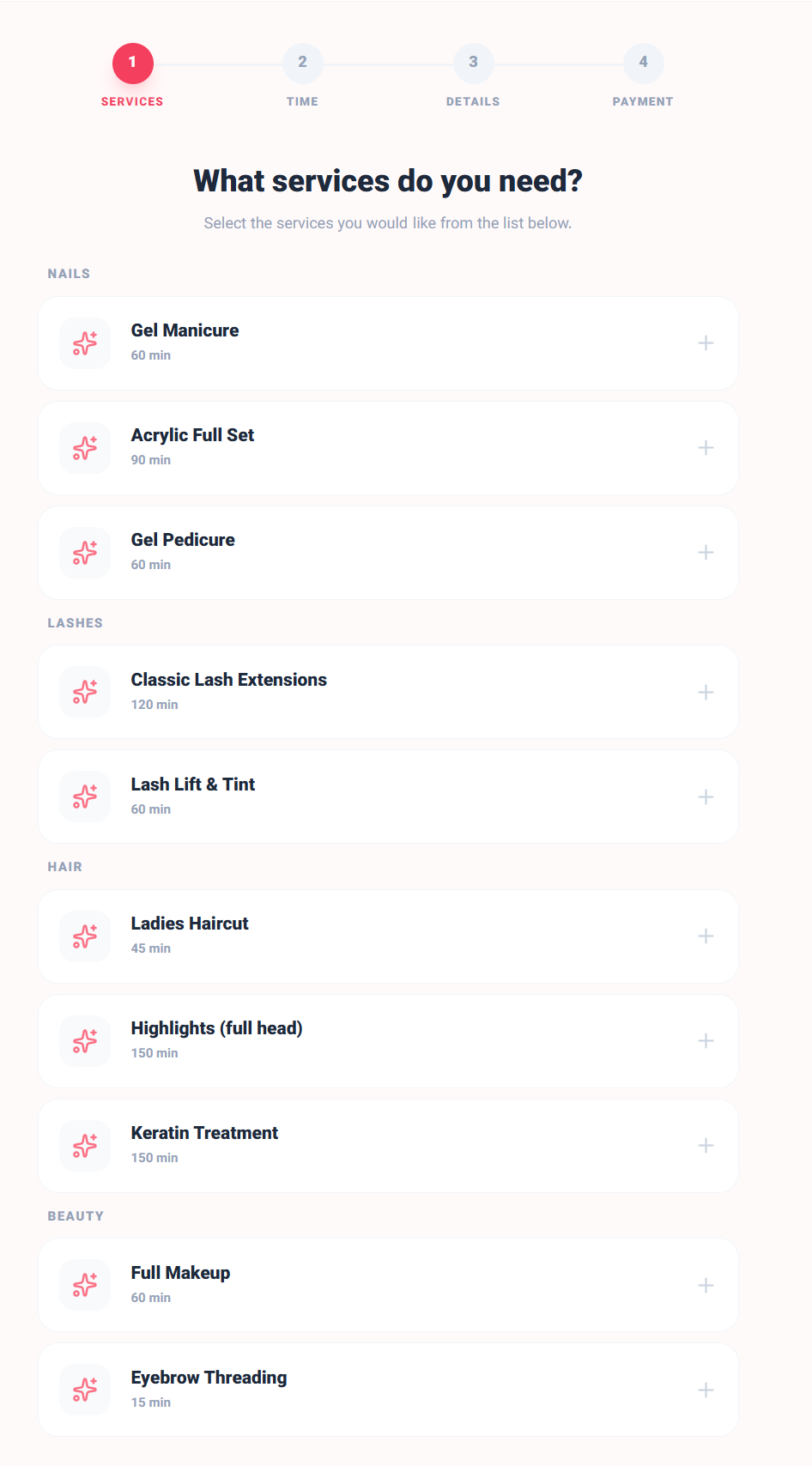
Three new appointments came in while the clinic was dark. Not by phone, not by email at 11pm that someone has to chase — through the clinic's own online booking page, where clients pick a service, see real availability, and lock in a time themselves.
The page speaks the client's language too, which matters in a practice that sees a genuinely mixed clientele. A deposit was taken on the filler booking automatically, so a no-show costs the client, not the clinic. Priya does not have to do anything with these three; they are already in the diary, already confirmed. The quiet magic of online booking is that the busiest hours of the day happen while everyone is asleep.
49:15am — A first-time client, done properly
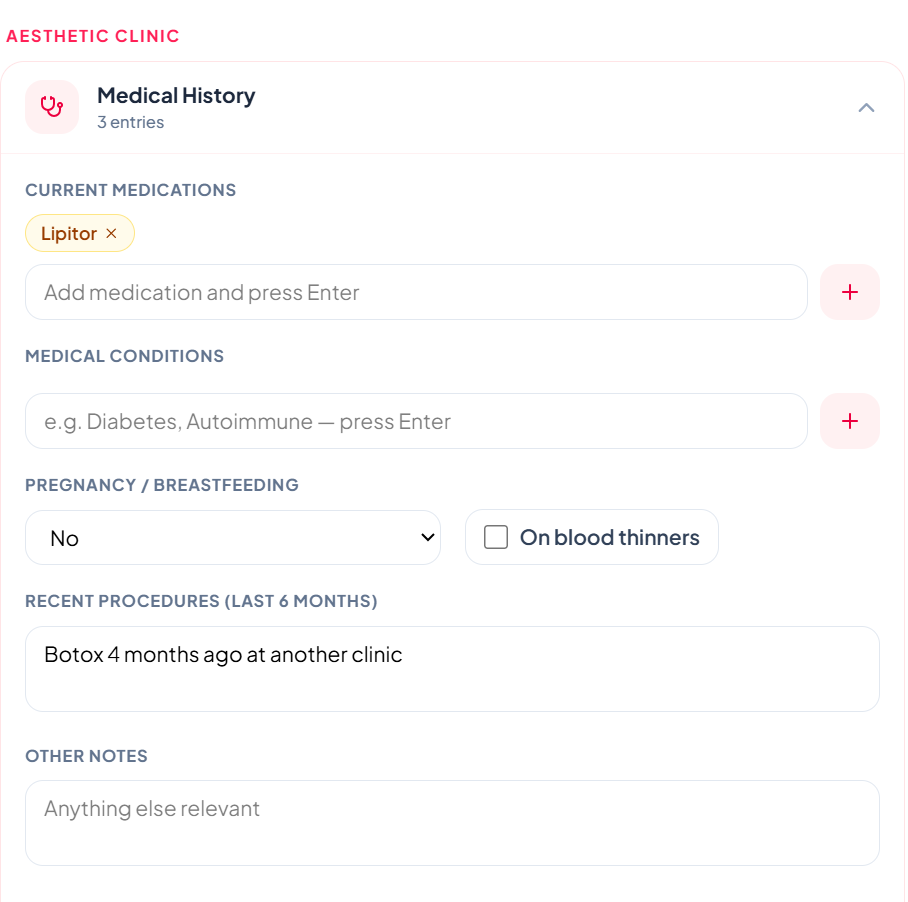
The 9:15 is new. Before a needle goes anywhere near her, the nurse opens a fresh client record and works through the medical history: current medications, conditions, whether she is pregnant or breastfeeding, anything injected in the last six months, allergies.
This is not box-ticking. In aesthetics it is the line between a safe treatment and a complaint — or worse. The history lives on the client's profile permanently, so next visit the nurse is not asking the same questions from scratch; she is reviewing and updating. Everything about that client — visits, spend, notes, photos, plans — sits in one place she can pull up in seconds at the chairside.
59:25am — Consent, captured on the iPad
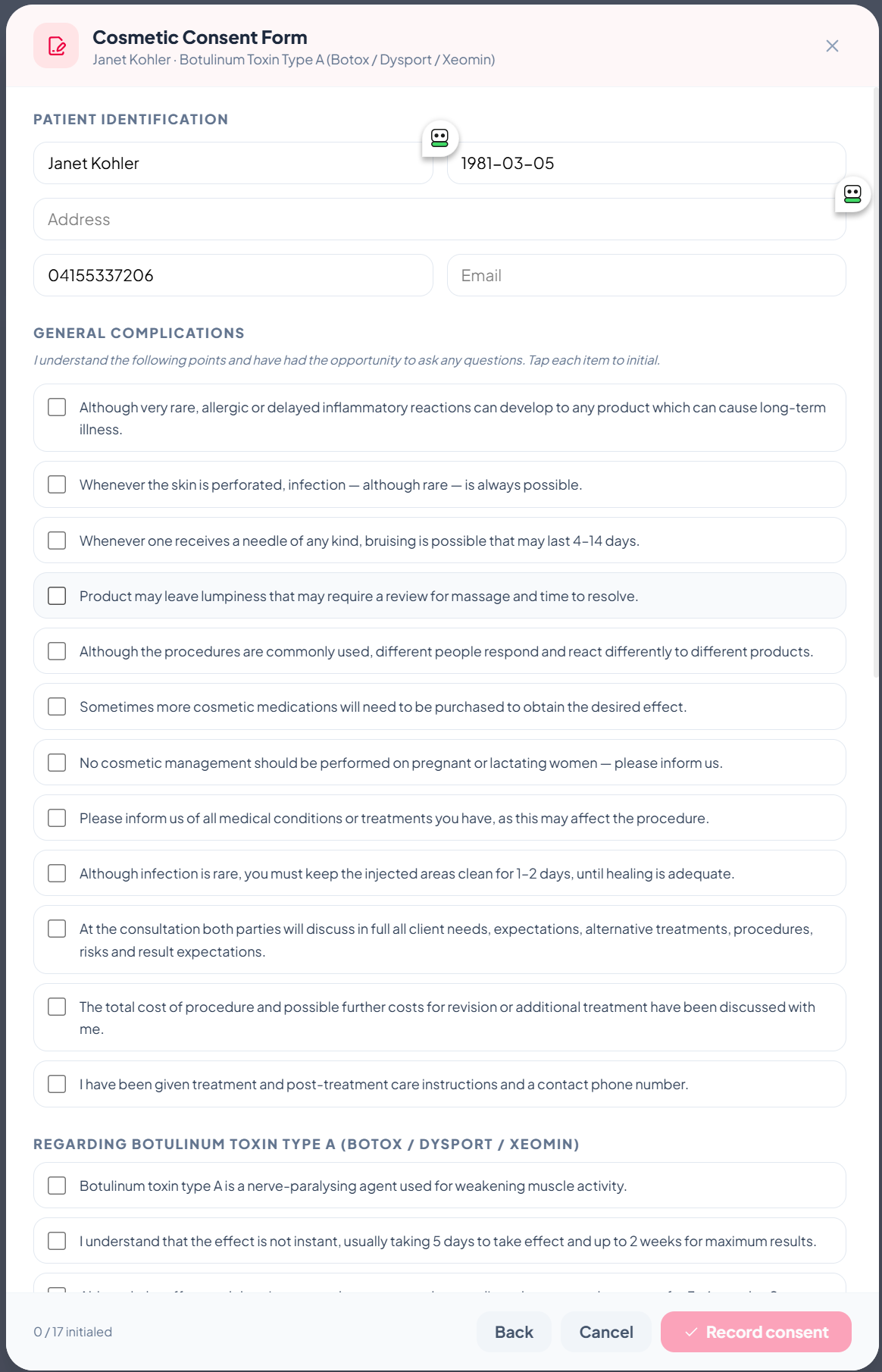
Same client, same chair. The nurse hands her an iPad with the cosmetic consent form for the exact product she is having today. The client reads it, initials each clause, and signs on the glass. The nurse counter-signs.
No printing, no scanning, no drawer of paper that someone has to find again if a question is ever raised. The signed form is stored against the client's record with the date and the treatment attached. Clinics can use the built-in templates or upload their own forms; either way the signature is captured digitally and kept. It takes two minutes and it is the kind of record that, on the day you need it, you are very glad you kept.
610:00am — A treatment that takes more than one visit
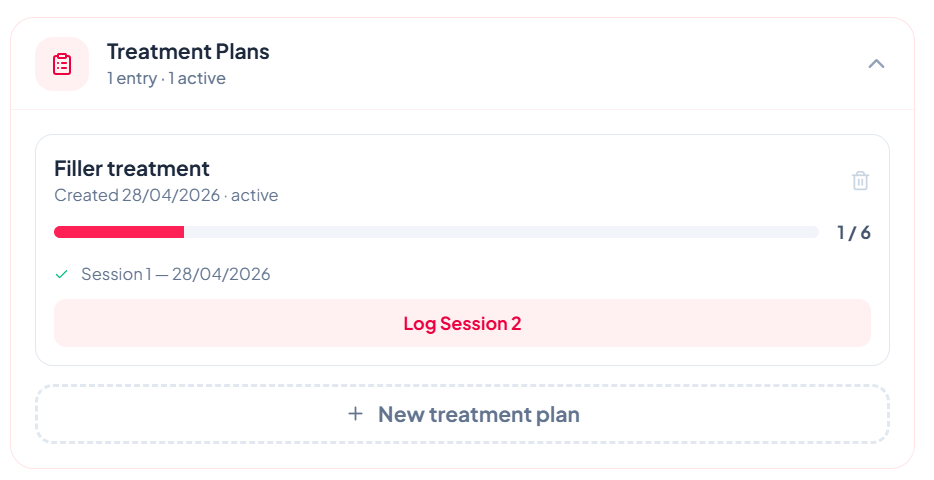
Not everything is one-and-done. The therapist's 10am is three sessions into a six-session skin programme. Rather than guess where they are up to, she opens the client's treatment plan: a progress bar, the dates of past sessions, and a button to log today's.
This is how a course of laser, peels, or filler corrections is supposed to be tracked — as a plan, not a pile of loose appointments. The client can see how far through she is, which makes the conversation about booking the next session an easy one. When the plan is finished, it is marked complete and the history stays. It is structure the clinic used to keep in someone's head.
712:30pm — Paying at the front desk
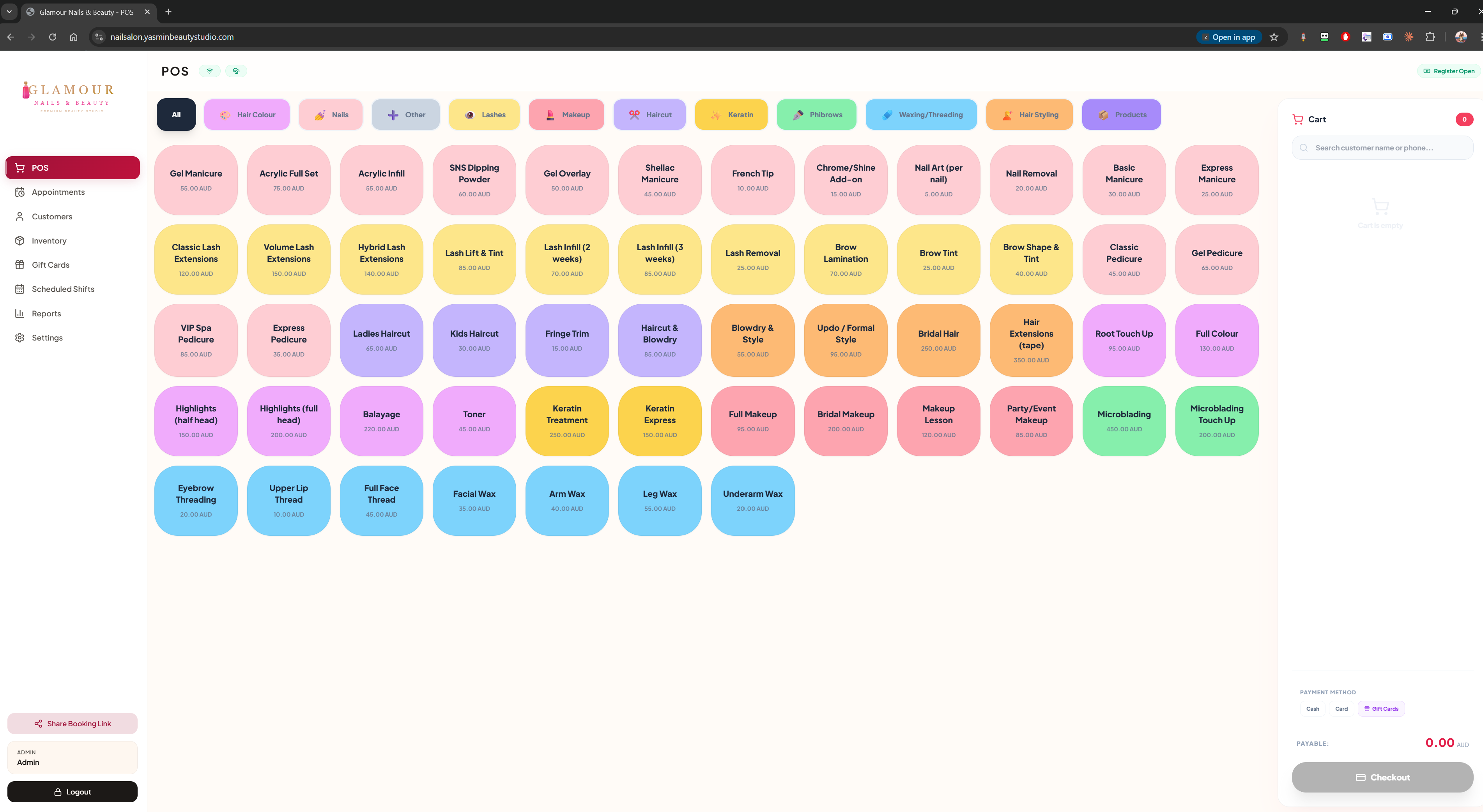
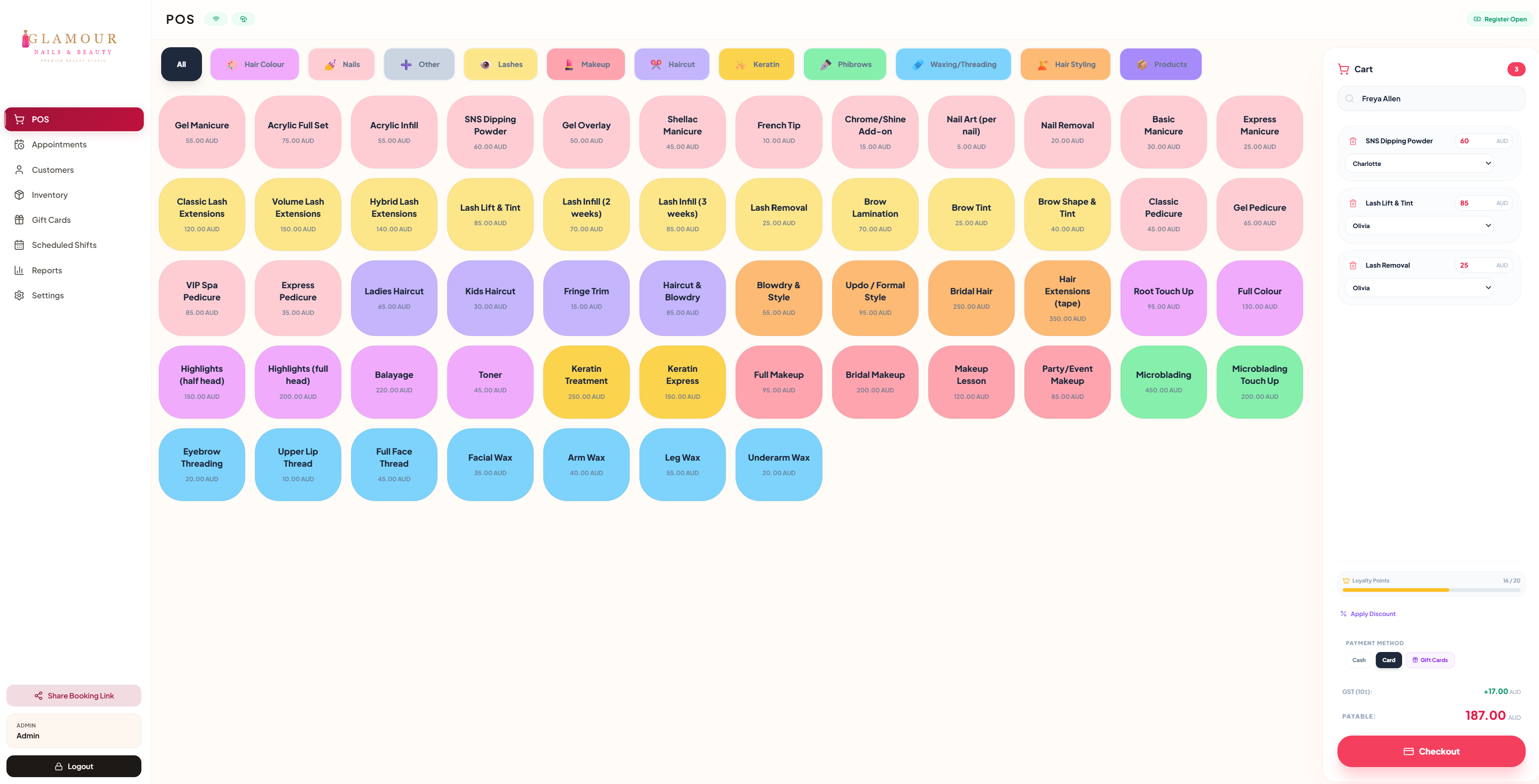
Lunchtime is the counter's busiest stretch. A client finishing her appointment pays for the treatment and picks up a retail serum on the way out. Priya taps both onto the same order, adds a staff tip, takes the card payment, and the receipt is done.
The sale is attributed to the practitioner who did the work, which the clinic cares about because the injectors are on commission. The retail item comes off the shelf count automatically. None of this is a separate system bolted on — the point of sale, the diary, the client record, and the stock count are the same software, so a single tap at checkout updates all of them at once.
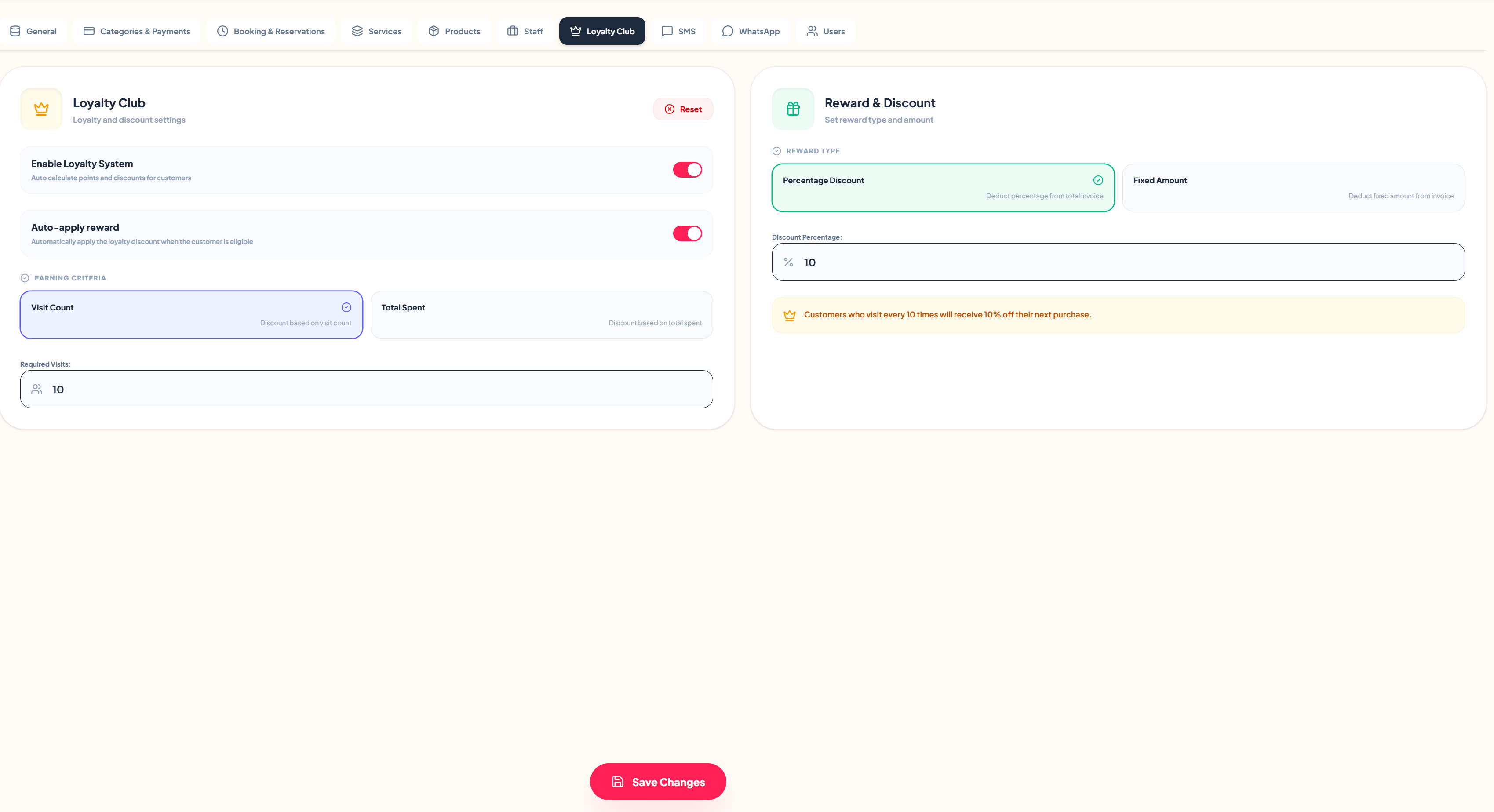
81:00pm — Looking after the regulars
A loyal client is in for her usual. She has been coming for two years, and the clinic would rather she kept coming than drifted to the place that opened down the road. So NC Clinics runs a simple loyalty club: points on every visit, a reward when she hits the threshold, applied at the till without anyone hunting for a punch card.
Gift cards work the same way — bought at the counter or online, redeemed against any treatment, balance tracked automatically. None of it is loud or gimmicky. It is just the small, consistent reasons a good client has to come back, built into the software instead of living on goodwill alone.
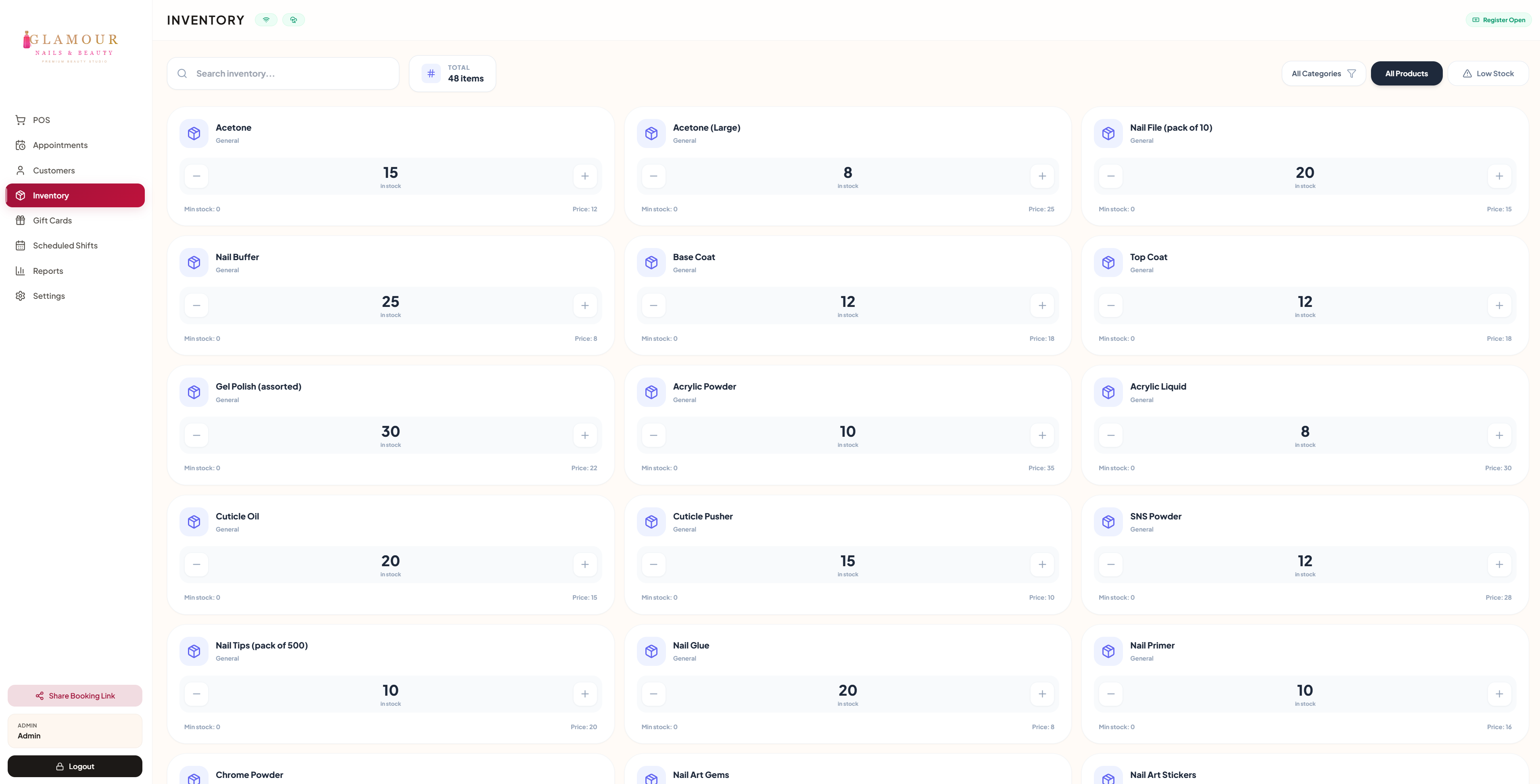
93:00pm — Stock that counts itself down
Mid-afternoon, the therapist notices the clinic is running low on a popular serum. She does not have to. The inventory already knows — every retail sale since this morning has ticked the count down, and low-stock items are flagged before they hit zero.
For a clinic, this cuts both ways: retail shelves that never embarrassingly run dry, and consumables that get reordered before a treatment day is at risk. It is the least glamorous feature in the building and quietly one of the most useful. A quick glance at the stock list tells her what to reorder, and the order gets placed before the supplier's cut-off.
104:30pm — The reminders nobody has to send
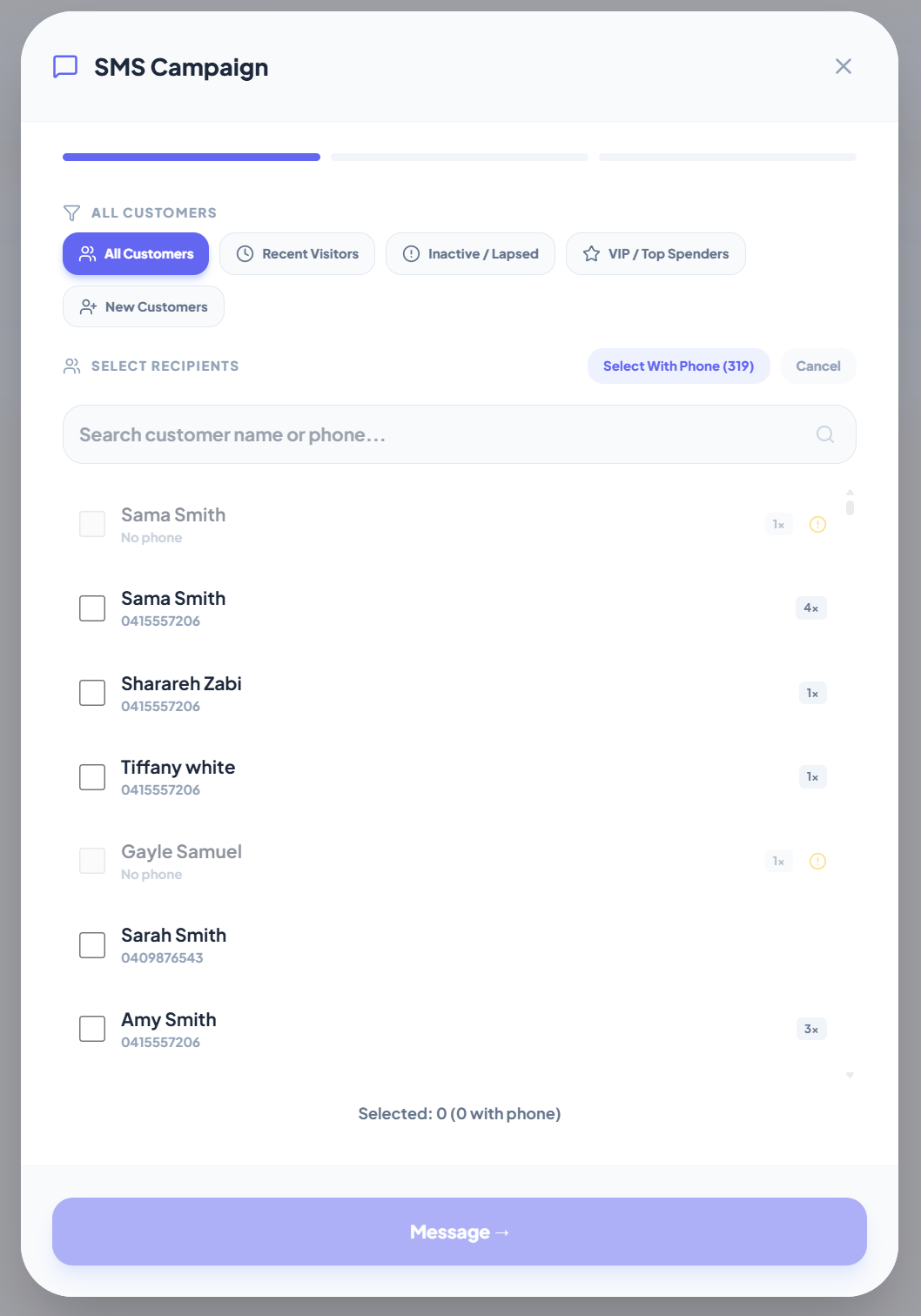
Tomorrow's clients get a nudge this afternoon, and not one of them is sent by hand. The clinic's SMS and WhatsApp reminders go out automatically ahead of each appointment, with a link to confirm or reschedule.
This is the single biggest lever on no-shows that a clinic has, and it runs without Priya lifting a finger. The same channel handles the occasional campaign — a message to lapsed clients, a note about a new treatment — but the day-to-day value is dull and enormous: full chairs tomorrow because today's software remembered to ask. An empty appointment is revenue that never comes back, and reminders are how you stop the leak.
115:00pm — Rosters, hours, and who did what
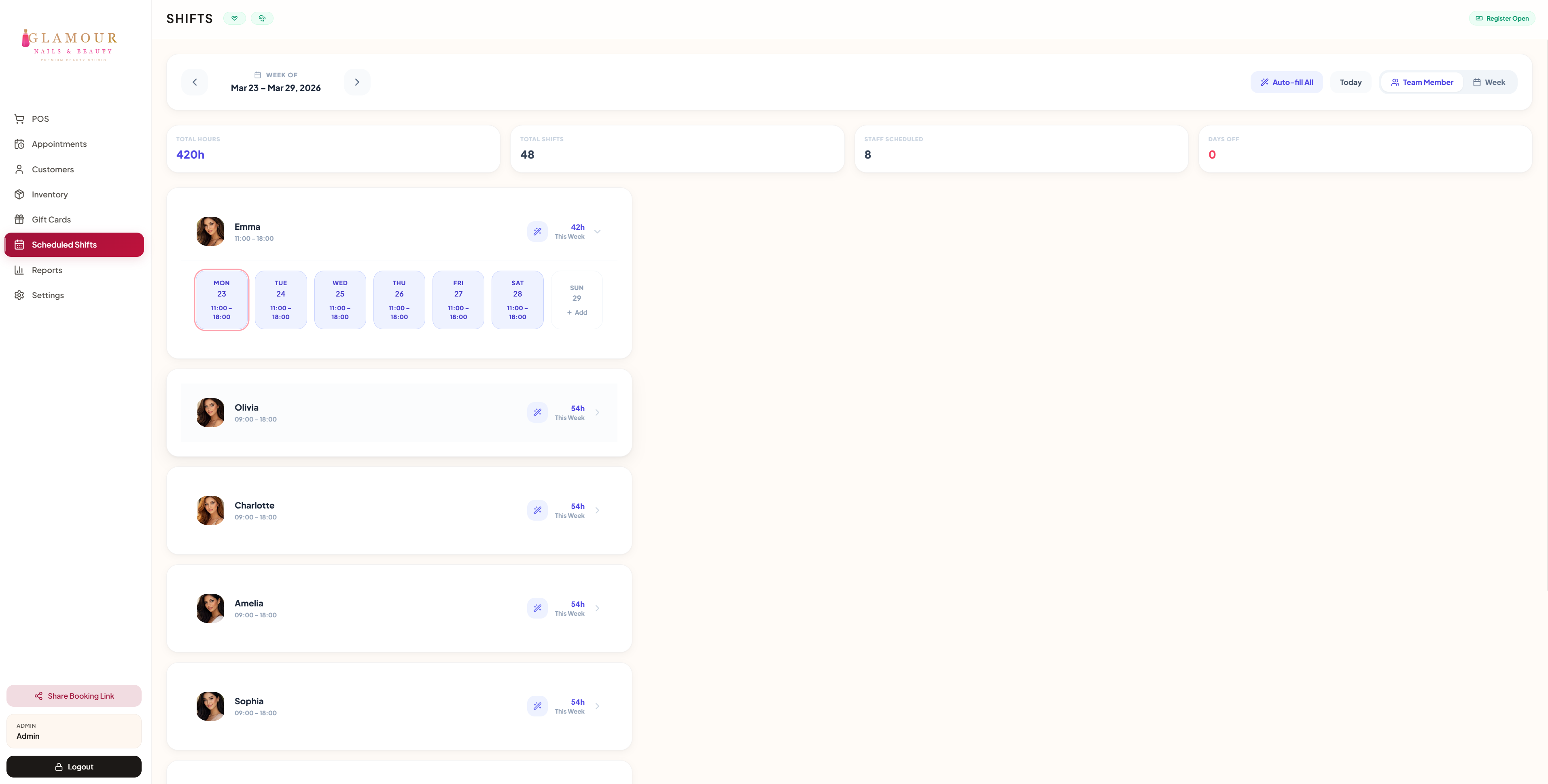
The injectors' week is not the same every week, so the clinic builds the roster in the same place it does everything else. Shifts are scheduled, hours are totalled, and because each sale is already attributed to a practitioner, commission practically calculates itself at pay time.
There is no cross-referencing a roster spreadsheet against a sales export at the end of the fortnight. The hours someone worked and the revenue they brought in live in one system, which makes the awkward end-of-month maths considerably less awkward. For a small team where everyone wears a few hats, that saved hour on a Friday is not nothing.
126:15pm — Closing the day by the numbers
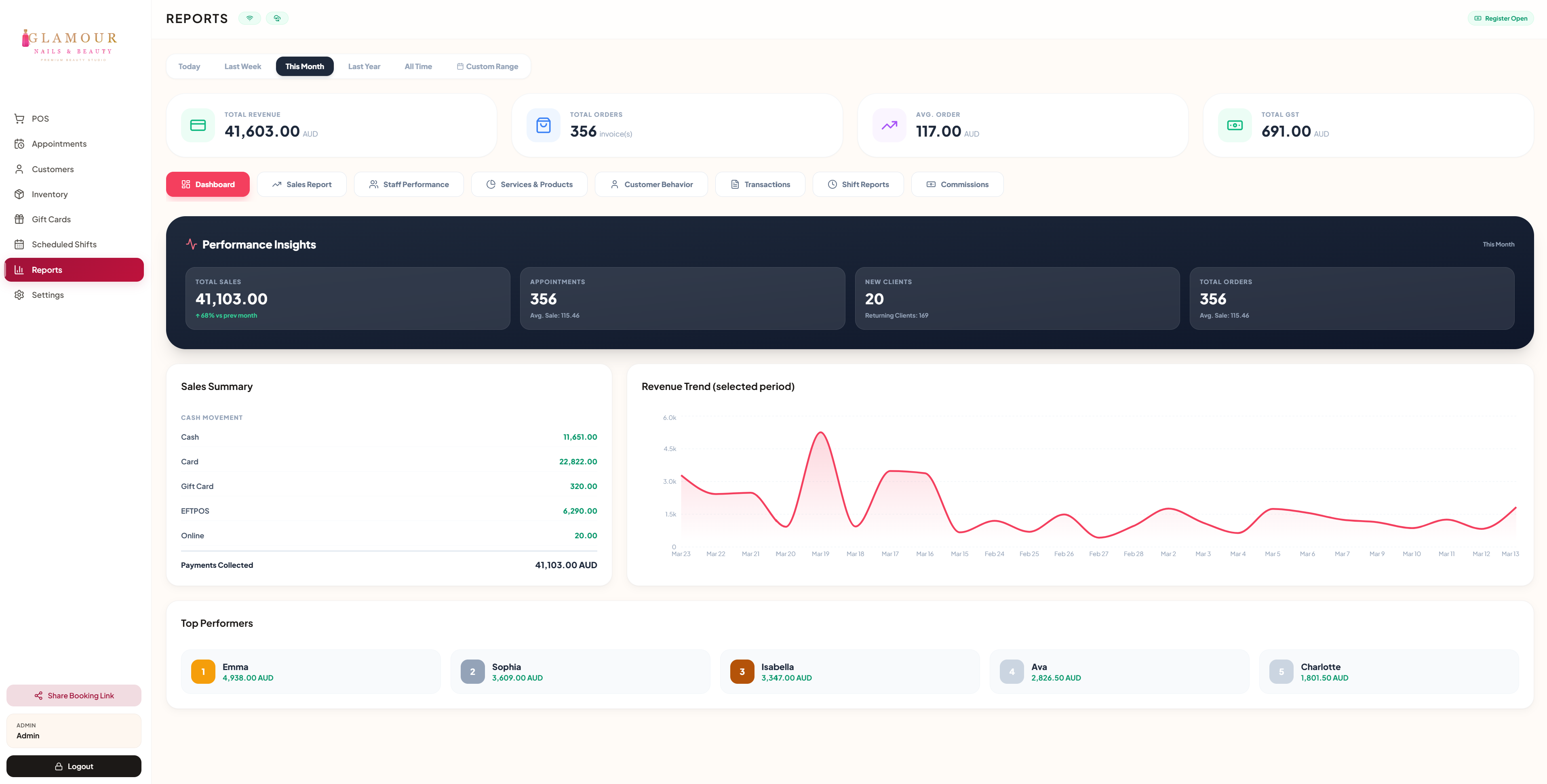
The last client leaves and Priya closes the register. Before she goes, she takes a thirty-second look at the day: total takings, number of treatments, average sale, how the split landed between cash, card, and online.
The owner, Dr Naomi Chen, will look at the bigger picture from home — this week against last, which treatments are pulling their weight, who the top performers are, how many new clients walked in. None of it needs a bookkeeper or a spreadsheet to assemble; the aesthetic clinic software has been quietly recording all of it since 7:40 this morning. The clinic does not run on guesswork. It runs on the numbers, and the numbers are already there.